Common Issues Installing Curtain Tracks
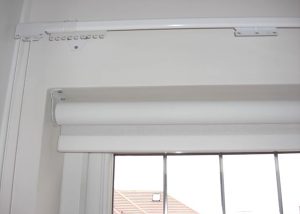
Installing a curtain track badly will inevitably lead to a series of problems. The track itself is likely to deform over time, it could be noisy and hard to operate, and you may also find that there is a more frequent requirement to fix and maintain the curtain track.
All this could be avoided with better planning and learning from common mistakes. The main factors to consider when installing a curtain track is the material of the wall or ceiling you are mounting the track to, the weight of the curtains eventually being attached and where exactly the track is being mounted, ie. a wall or a ceiling. If you consider these factors carefully you will avoid common issues such as:
- Incorrect measurements and track placement
Curtain tracks need to be extended beyond the dimensions of the window frame to allow for curtains to gather neatly and for natural light to be maximised. Thicker curtains gather differently and will block more daylight, so this needs to be allowed for. You also need to ensure track height is correct so that curtain length feels balanced and doesn’t leave awkward gaps at the bottom.
- Alignment errors
Not using a spirit level to align fixing points is a basic error and relying on just your eyes and your judgement often leads to misaligned tracks. Don’t assume walls and ceilings are exactly straight either. Even a few millimetres of misjudgement can look clumsy and forever irritating. If you are joining two shorter tracks together it is also essential that your middle coupler is aligned with the two fixings either side, otherwise the track won’t be straight, can deform and won’t run true.
- Support issues
You need to match the type and weight of your track and curtains to the type of anchors and fixings you use. It is common for people to skip using plugs, or to use the wrong plugs, or to use the wrong screws. This will lead to your curtain track pulling away from the wall under weight, if not immediately, after a period of use. For this reason, you need to study the material you are drilling into carefully and choose the right fixings. This includes checking whether there are any utilities, such as electrical wiring or gas pipework, behind the plasterboard.
- Operational issues
Installation issues, such as overlooking obstacles, are common. This can include coving, window handles, radiators or windowsills which can hamper operation of the curtain track. Other smaller issues, such as installing gliders the wrong way round, or omitting end stops on the track, are common but only short-term issues and can be quickly rectified.
Proper planning, careful alignment and using the correct fixings should avoid most common issues with curtain track installation. It is always better to seek professional support, and CTS London can look after the design, supply and installation of your curtain tracks so you get the best possible results.